
Datacenter proxies are one of the most commonly used proxies when there is a need for internet privacy, access to geo-restricted content and sites, and also to extract data from the web. In this article, we would explain what they are, how they work, and how they differ from residential proxies.
Post Quick Links
Jump straight to the section of the post you want to read:
Datacenter Proxies
Datacenter proxies just like the name implies, are IP addresses that are gotten from datacenter servers. Datacenters are corporations that offer cloud services like Google Cloud, Amazon AWS, and others. These types of IPs are not associated with ISPs.
Types of Datacenter Proxies
1 . Private
Private proxies are also referred to as dedicated proxies and they offer you IP addresses that you use alone for the given time or a certain domain.
2 . Shared
Shared proxies are used by more than one person at a time. They are paid and perform better than public proxies for simple tasks. Since they are shared, it's most likely to find that they have been blocked in some sites because of another user’s actions.
3. Public
Public datacenter proxies are also known as free proxies as you can find and make use of their IPs for free. They are only useful for a location change and are not recommended for any serious use. note that it’s not advisable to use HTTP datacenter proxies when filling out a form online with your sensitive details as they do not provide any form of protection at all, and leave you vulnerable to be hacked.
How They Work?
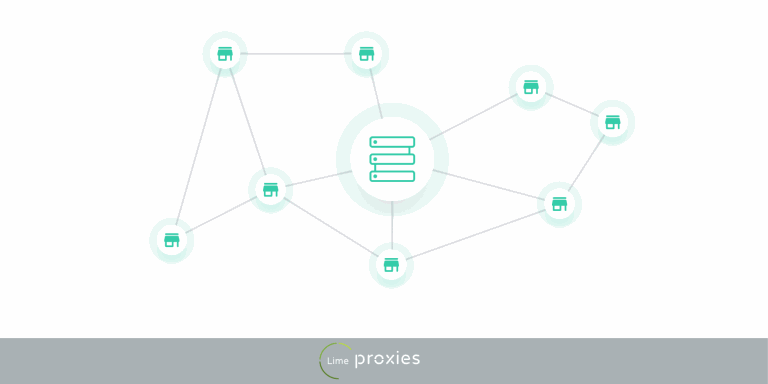
Datacenter proxies work just like proxies are meant to. When you send a request to the web, requesting information from a site the request doesn’t go direct but passes through the proxy server. Here, the traffic is processed and the proxy server sends the request on your behalf to the web using a different IP address so you are anonymous and the site doesn’t know you sent the request. When the information is sent back, it first goes to the proxy, and then to you. This way, your internet privacy is protected at all times.
Uses of Datacenter Proxies
1 . Keeps You Anonymous
With datacenter proxies, you can access the internet without showcasing your IP address. The IP address that would be used would be that of the server you choose, thereby protecting your internet privacy.
2. Web Scraping
When scraping data from the internet, websites can easily block you. but with the use of datacenter proxies, you can use multiple IPs for the task so websites don’t recognize your activity. The anonymity the proxies provide is also important as some sites will feed you with the wrong information if they recognize you as a competition.
3. Social Media Marketing
Many social media platforms limit the number of user accounts per IP. Following said limit would not be beneficial in creating the level of awareness you want for your business and so marketers try to overcome such restrictions. With proxies, you can have multiple social media accounts and even automate their use and management.
4. Access Geo-Restricted Content
Sometimes, access to particular content or website isn’t available to those in some areas. Since datacenter proxies have servers all over the world, you can easily switch to another server and browse as if you are that location. This will open up access to the previously restricted content or website.
5. Control Incoming and Outgoing Requests
Datacenter proxies can be used to filter both incoming and outgoing traffic on a network. By setting up a reverse proxy server, you would be able to cache content, limit access to your website, and generally moderate internet use.
6. Sneakers Copping
When limited edition sneakers are released, they get sold out rapidly. A bot is your best chance at successfully making a purchase. The more requests you send, the better your chances, and by using proxies you can send multiple requests without getting banned. You also need proxies if you would be making multiple purchases because one IP address cannot make two purchases.
Comparing Datacenter Proxies with Residential Proxies
In comparison, datacenter proxies have some benefits over residential proxies, but they are also some tradeoffs to its use. comparing different features of both, here is how they perform:
- Performance: datacenter proxies offer high speed and better stability, but are not the most reliable to use especially when visiting very secure websites. This is because they are not real IPs and can be easily detected and blocked. Even though datacenter proxies have groups of IPs called subnets, the subnets could still be blocked by the website all at once.
- Stability: the uptime of up to 99% that datacenter proxies have made them more stable and reliable than residential proxies.
- Speed: dedicated datacenter proxies offer faster internet speed when compared to residential proxies. This is because their servers are powerful and capable of a speedy internet connection. Residential proxies on the other hand borrow real users’ internet and as we all know, it isn’t always stable or fast.
- Price: datacenter proxies are cheaper than residential proxies and are often bought per number of IPs. Residential proxies are not so easy to get, so they cost more and are charged per traffic used.
- Ease of use: datacenter proxies don’t rotate and they usually come in proxy lists. So using them would require experience and are more difficult to maintain when compared to residential proxies which conveniently use backconnect servers.
- Locations: datacenter proxies usually cover fewer locations than residential proxies due to the high cost of maintaining proxy servers.
- Scalability: since residential proxies have pools that can contain millions of IPs, they scale better.



About the author
Rachael Chapman
A Complete Gamer and a Tech Geek. Brings out all her thoughts and Love in Writing Techie Blogs.
View all postsRelated Articles
Are Free Proxies Safe? What 53 Million Exit Nodes Reveal
Free proxies are not free — they are paid for with someone's compromised device, and often with your data. Independent 2026 research measured how much of the free proxy supply runs on malware-infected hardware, and the number is worse than most teams assume.
Web Data Collection for AI in 2026: The Closing Web
The open web stopped being open by default. Blanket AI-crawler blocking, per-crawl paywalls and a widening crawl-to-referral gap have changed the economics of collecting training and retrieval data. This is what actually changed, and what a defensible pipeline looks like now.
Why Your Scraper Gets Blocked: The 2026 Anti-Bot Stack
If you are still getting 403s on clean residential IPs, the IP is not the problem. Modern bot detection scores five independent layers, and four of them live in your HTTP client — not your proxy. This is what each layer measures and what you can actually do about it.