
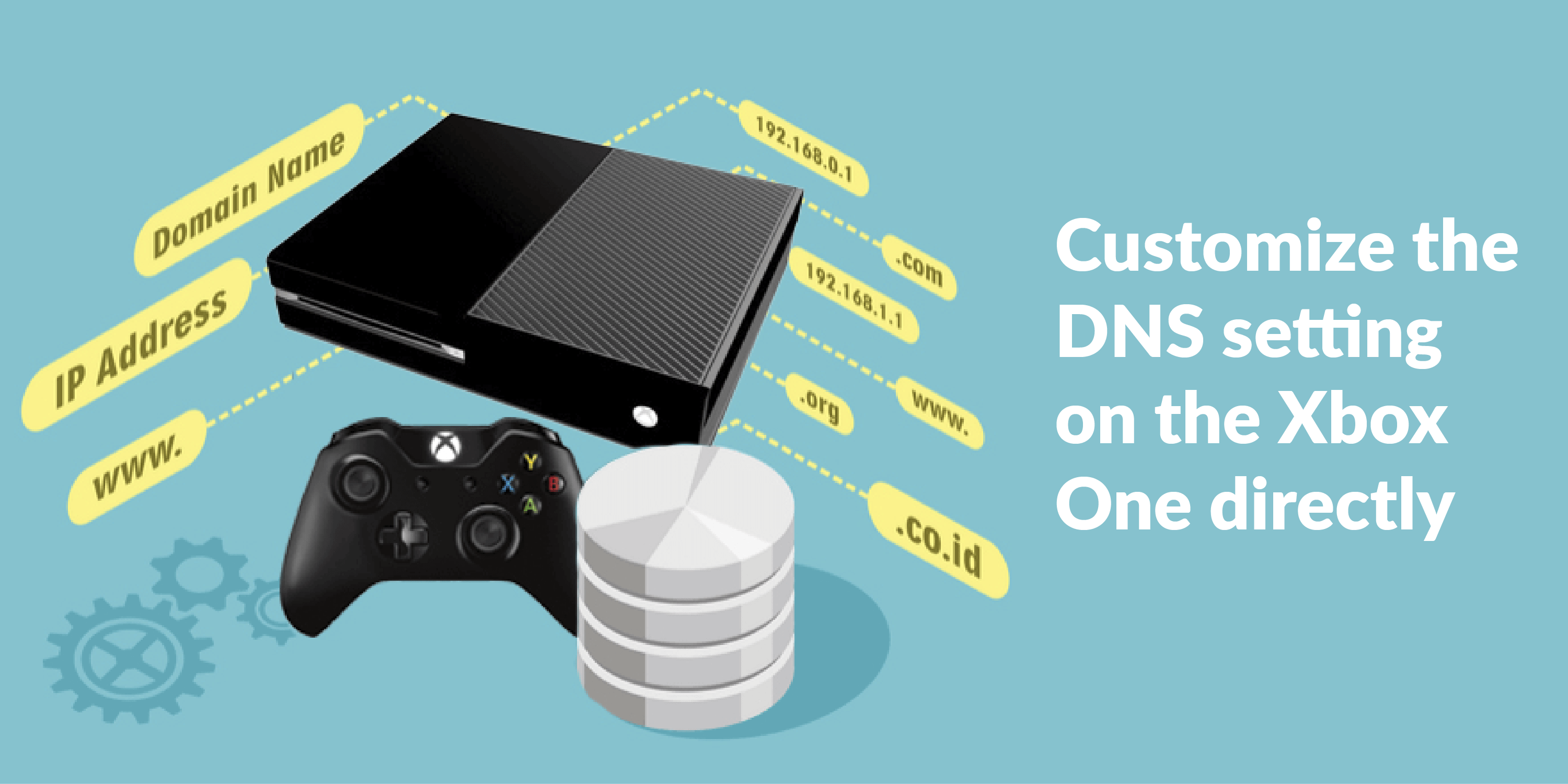
Users of Xbox One may find themselves wanting to change the DNS Setting for several reasons. Some users may want to increase network speed, while some may just simply want to surf the internet under the hood of privacy.
Google, among other providers, have DNS services that are faster than that of some Internet Service Provider or ISP. However, there is the issue of privacy. Will these large corporations that have advertising arms really protect the privacy of its users? Even ISPs are allowed to gather the information of users and sell these to other companies for marketing and advertising profiling.
The solution is to customize the DNS setting on the Xbox One directly, and setup a custom DNS server. This article focuses on the Xbox One version and how to change the DNS Settings on the said video gaming device using a proxy server.
The following are the step by step instructions on how to do this.
1. Press on the “Settings†button of the Xbox One controller.
2. Select “Settingsâ€.
3. Choose “Networkâ€.
4. Go to “Advanced Settingsâ€.
5. Select “DNS Settingsâ€.
6. Save a screenshot of the existing DNS settings.
7. Choose “Manualâ€.
8. Enter the new DNS servers.
  For ex : 8.8.8.8
                8.8.4.4
9. Press “B†to exit the Settings menu.
10. Restart the Xbox One.
It is important to reiterate that the original DNS settings of the Xbox One should be saved so that the user will have something to revert to in case he or she encounters some connectivity problems.
Post Quick Links
Jump straight to the section of the post you want to read:



About the author
Rachael Chapman
A Complete Gamer and a Tech Geek. Brings out all her thoughts and Love in Writing Techie Blogs.
View all postsRelated Articles
Are Free Proxies Safe? What 53 Million Exit Nodes Reveal
Free proxies are not free — they are paid for with someone's compromised device, and often with your data. Independent 2026 research measured how much of the free proxy supply runs on malware-infected hardware, and the number is worse than most teams assume.
Web Data Collection for AI in 2026: The Closing Web
The open web stopped being open by default. Blanket AI-crawler blocking, per-crawl paywalls and a widening crawl-to-referral gap have changed the economics of collecting training and retrieval data. This is what actually changed, and what a defensible pipeline looks like now.
Why Your Scraper Gets Blocked: The 2026 Anti-Bot Stack
If you are still getting 403s on clean residential IPs, the IP is not the problem. Modern bot detection scores five independent layers, and four of them live in your HTTP client — not your proxy. This is what each layer measures and what you can actually do about it.